Who will love it
Churchill War Rooms
VerdictChurchill War Rooms

Churchill War Rooms
An authentic underground bunker complex and museum dedicated to the life of Winston Churchill and the British government's operations during World War II.
The authentic underground headquarters where the British government directed World War II operations.
The bunker is remarkably preserved, but the low ceilings and narrow passageways can feel claustrophobic during peak hours. This site is a deep dive for those who value historical accuracy; those seeking a fast-paced or highly visual attraction may find the dense, audio-guided format taxing.
The Churchill Museum section is much larger than the War Rooms themselves, so pace your energy accordingly.
Entry at 9:30 AM is the only way to experience the silence of the corridors before the mid-day crowds arrive.
Adult entry is £32.00. Use the Westminster tube station on the Jubilee, District, or Circle lines for the shortest walk to the entrance on King Charles Street.
Budget a full 2.5 hours. The museum portion alone contains thousands of documents and artifacts that history buffs will find difficult to skim.
This is a site for the patient observer. If you enjoy the weight of historical significance and do not mind the windowless, slightly cramped environment, it is unparalleled; however, those looking for a quick 'best of' London tour may find the dense information overwhelming.
Practical Insight: Bring a pair of wired headphones to plug into the audio guide so you can keep your hands free for taking photos or navigating the museum's touchscreens.
The standard admission ticket is the most practical choice for almost every visitor. It includes a high-quality audio guide, which is essential for understanding the complex history of the bunker.
There are no 'fast-track' tickets sold separately because entry is strictly managed by timed slots; however, booking your specific time online is mandatory to guarantee entry.
The most common mistake is arriving without a pre-booked time slot. Even if the museum looks quiet from the outside, the narrow underground corridors have a strict capacity limit, and walk-ins are frequently turned away during the middle of the day.
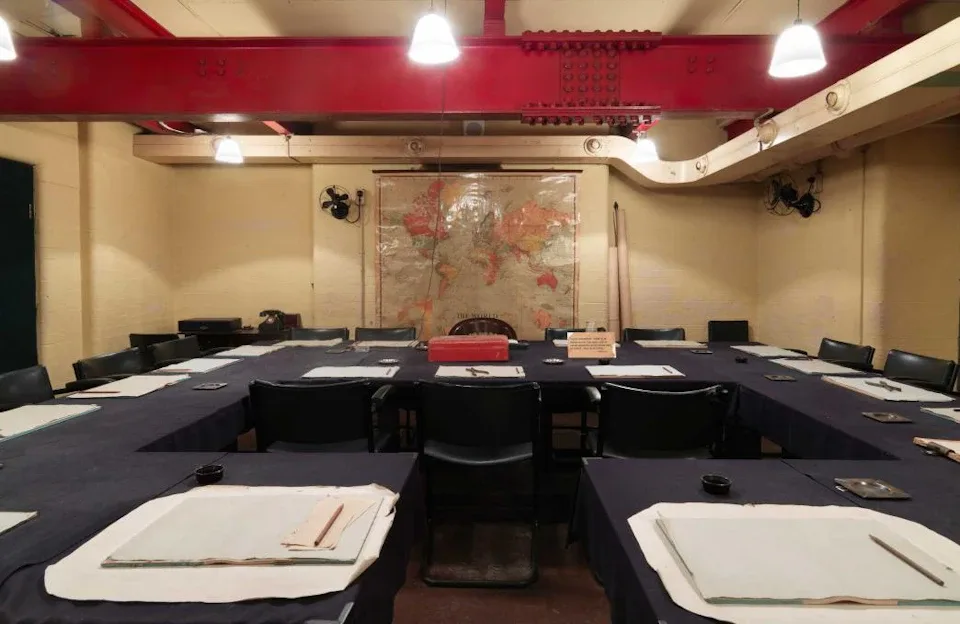
The best strategy is to book the first slot of the day at 9:30 AM. Because the War Rooms are located in an authentic underground bunker, the corridors are narrow and can feel cramped once the midday crowds arrive. Visiting early allows you to move through the Cabinet Room and the Map Room without waiting behind rows of other visitors.
If you cannot make the morning, the final slots of the day—usually around 4:00 PM—are quieter, but you will need to move quickly to see both the War Rooms and the extensive Churchill Museum section before the 6:00 PM closing time. Photographers should note that lighting is low and consistent throughout the day since the site is entirely underground.
The Churchill War Rooms are a major highlight of the London Pass and the Go City Explorer Pass. If you are planning to visit other nearby landmarks like Westminster Abbey or the Tower of London, using a pass is the most effective way to save on the entry fee.
For local residents or frequent visitors to the UK, the Art Fund National Art Pass offers a 50% discount on standard entry. Families should take advantage of the reduced rates for children aged 5 to 15, while children under 5 enter for free. There are also specific concessions for seniors and students with valid ID.
The included audio guide is exceptionally detailed, featuring archival clips and eyewitness accounts, which makes a private guide unnecessary for most people. A self-guided visit allows you to spend as much time as you want in the Churchill Museum section, which is packed with interactive exhibits and personal artifacts.
A guided tour is only worth the extra investment if it is part of a broader 'WWII London' walking tour. These tours provide the external context of the Blitz and the Westminster government district before you descend into the bunker.
For true history enthusiasts, look for rare 'Behind the Glass' private tours that occasionally offer access to areas typically sealed off from the public.
The nearest Tube stations are Westminster (Jubilee, District, and Circle lines) and St. James's Park (District and Circle lines). Allow at least 90 minutes to two hours for the full experience, as the museum section is much larger than it appears from the entrance.
Expect high crowd density in the narrow underground corridors, especially during midday slots which frequently sell out.
Mini-calculator based on crowd levels by day and time.
This day has average visitor density. This slot has a higher chance of a comfortable visit: Quieter late afternoon slots.
The entrance is located at Clive Steps on King Charles Street, tucked behind the massive government buildings of Whitehall. Look for the bronze statue of Clive of India; the entrance is right next to it, leading down a flight of stairs.
If you have mobility requirements, there is a lift accessible via the same entrance area, though you should notify the staff on the street level immediately upon arrival.
Expect a mandatory security screening before you descend into the bunker. This process is thorough and can create a bottleneck, especially during the middle of the day. Once inside, you will receive an audio guide, which is included in the ticket price and essential for navigating the dimly lit, narrow corridors.
The Churchill War Rooms are located in an underground bunker where space is at a premium. Expect narrow corridors, low ceilings, and dim lighting, which can feel claustrophobic during peak times. You will be on your feet for approximately 90 minutes to two hours, so comfortable walking shoes are essential.
While the site is fully accessible via a lift at the Birdcage Walk entrance, the tight layout makes navigating with large mobility aids or wide strollers difficult.
Advance booking is mandatory as time slots frequently sell out days in advance. There is no air conditioning in the original bunker sections, so the atmosphere can become warm and stuffy when the museum is at capacity. Security checks are conducted at the entrance, so arrive at least 10 minutes before your scheduled slot to allow for screening.
There are no cloakroom facilities or lockers available on-site. Any bags larger than 45cm x 30cm x 45cm will be refused entry, and you will be directed to external luggage storage services at nearby transport hubs like Victoria or Charing Cross stations.
Small, foldable strollers are permitted inside the galleries, but due to the narrow passageways, you may be asked to leave larger prams in a designated unsupervised area near the entrance.
Start your morning with a quiet walk through St. James's Park before entering the Churchill War Rooms to explore the underground bunker. For lunch, enjoy a classic British meal at The Red Lion pub nearby, then spend your afternoon visiting the historic Westminster Abbey and photographing Big Ben.
End the day by walking across Westminster Bridge to the Southbank for a sunset view of the city skyline. Note: Book your entry to the War Rooms in advance as time slots sell out quickly, especially during the middle of the day.
Hidden beneath the streets of Whitehall, this underground bunker served as the nerve center for the British government during the Second World War.
Constructed shortly before the outbreak of hostilities, the Cabinet War Rooms provided a secure space where Winston Churchill and his key strategists could direct military operations while London faced the Blitz.
What makes this site unique is its remarkable state of preservation. When the war ended in 1945, the lights were simply switched off and the rooms were left largely untouched for decades. Today, visitors see the Map Room exactly as it appeared on the final day of the conflict, with pins still marking troop positions and sugar cubes left in desks.
The site also houses a comprehensive museum dedicated to Churchill’s life and legacy. It balances the claustrophobic reality of living underground with a deep dive into the decisions that shaped the modern world, making it an essential stop for understanding British resilience.
Fully accessible via lift with step-free routes throughout the bunker.
Best for ages 7+; free entry for under-5s; stroller parking required.
The Churchill War Rooms are fully accessible to wheelchair users. A dedicated lift at the entrance on Birdcage Walk provides access to the underground complex, and the entire visitor route is step-free.
While the historic corridors are narrow, they are wide enough to accommodate standard manual and electric wheelchairs. Two manual wheelchairs are available for loan at the entrance on a first-come, first-served basis.
Due to the cramped nature of the original wartime bunker and narrow passageways, strollers and buggies are not permitted within the museum. A designated buggy park is located near the entrance for secure storage during your visit.
Children under the age of 5 enter for free, while those aged 5 to 15 require a child ticket priced at £16.50. All visitors under 16 must be accompanied by an adult.
The museum is located entirely underground with low ceilings and dim lighting, which may be challenging for visitors prone to claustrophobia. To help engage younger guests, a specialized family audio guide is included with admission.
Be aware that the site can become quite crowded; the narrowest sections are within the Cabinet War Rooms, where movement is restricted to a single-file flow.
Restrooms are located inside the museum complex and are free for ticket holders. You can find them near the entrance and adjacent to the Churchill Museum section. Baby-changing facilities are available within the accessible toilets.
The Churchill War Rooms Cafe provides a casual underground dining space. The menu features traditional British dishes such as savory pies, stews, sandwiches, and afternoon tea selections. While you may bring a personal water bottle, drinking is only permitted within the cafe area to protect the historic maps and documents in the bunker rooms.
A gift shop is situated at the end of the visitor route. It specializes in World War II history books, Churchill-themed stationery, replica wartime posters, and unique memorabilia. Free Wi-Fi is accessible throughout the site, though the thick reinforced ceilings of the bunker can cause the signal to be intermittent in the deeper corridors.