Who will love it
Price from: £24 Duration: 1.5 to 2 hours Best time: Weekday mornings around 10:00 AM Booking required: Yes District: Greenwich
VerdictPrice from: £24 Duration: 1.5 to 2 hours Best time: Weekday mornings around 10:00 AM Booking required: Yes District: Greenwich

Price from: £24 Duration: 1.5 to 2 hours Best time: Weekday mornings around 10:00 AM Booking required: Yes District: Greenwich
Science and history enthusiasts who want to stand on the historic Prime Meridian line and see John Harrison’s groundbreaking marine chronometers should prioritize this visit. It offers a fascinating look at the history of navigation and timekeeping, paired with excellent hilltop views of Greenwich Park and the Canary Wharf skyline.
The historic hilltop site where the world’s time is set and the Prime Meridian is marked.
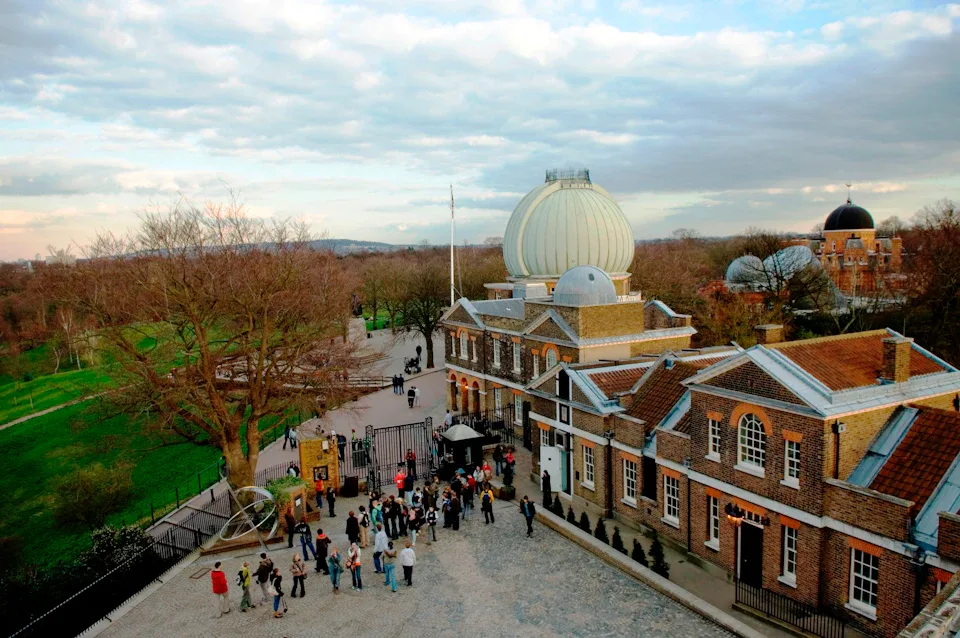
The climb up through Greenwich Park is steep, but it leads to the birthplace of Greenwich Mean Time and the home of the Great Equatorial Telescope. Inside Flamsteed House, the focus is on the technical evolution of navigation, showcasing the original sea clocks that solved the problem of longitude.
It is a quiet, scholarly experience that rewards those with a genuine interest in horology and maritime history.
Arrive at 10:00 AM to access the Meridian Courtyard before the peak afternoon crowds and school groups.
Adult tickets are £20.00. This covers entry to the historic Observatory buildings and the Meridian line courtyard.
Plan to be near Flamsteed House at 1:00 PM to see the red Time Ball drop, a tradition maintained for nearly two centuries.
The primary draw for many is the photo opportunity on the Prime Meridian line, which often results in a long, slow-moving queue in the courtyard. If you are more interested in the panoramic views of the London skyline than the brass marker itself, you can enjoy the same vantage point from the public terrace just outside the Observatory gates for free.
This attraction is a must-visit for science and history enthusiasts who will appreciate the intricate mechanics of the Harrison clocks. However, those looking for an interactive or fast-paced experience may find the museum galleries a bit dry.
Editor's Tip: A secondary marker for the Prime Meridian is embedded in the path outside the main fence, offering a similar photo opportunity without the ticket cost or the wait.
For most visitors, the standard Royal Observatory entry ticket is the correct choice. It provides access to the Meridian Line, the Great Equatorial Telescope, and the historic Flamsteed House. If you are interested in space shows, you must purchase a separate ticket for the Peter Harrison Planetarium, as it is not included in the general admission.
A common mistake for first-time visitors is assuming the Prime Meridian line is accessible for free. While a small portion of the line is visible outside the gates, the famous stainless steel strip where you can straddle two hemispheres is located strictly within the paid courtyard.
To avoid the longest queues for the Meridian Line photo, arrive exactly when the gates open at 10:00 AM. The courtyard becomes significantly more crowded after 11:30 AM as tour groups arrive from central London.
If you prefer a quieter atmosphere, the final hour before closing often sees the crowds thin out, though you will have less time to explore the galleries.
For photographers, the late afternoon provides the best light over the Queen’s House and the Canary Wharf skyline, which are visible from the Observatory’s viewpoint. Families should aim for weekday mornings to navigate the narrow staircases of Flamsteed House with more ease.
The Royal Observatory is included in the London Pass and the Go City Explorer Pass, which is the most efficient way to visit if you plan on seeing the nearby Cutty Sark or taking a River Bus. If you are visiting multiple Royal Museums Greenwich sites, the Day Explorer pass is the standard way to reduce the total cost.
Children under the age of 4 enter for free. Students and seniors (65+) are eligible for reduced rates with valid identification. Residents of the Royal Borough of Greenwich can often access specific local discounts with a Greenwich One Card, though these must be processed at the ticket desk.
For the majority of visitors, a guided tour is not strictly necessary because a high-quality audio guide is typically included with the standard entry ticket. The audio guide provides a deep dive into the work of John Harrison and the quest for longitude at your own pace.
A guided tour adds genuine value if you are a horology enthusiast or a history buff who wants to ask specific questions about the clocks and telescopes. Otherwise, the self-guided route with the provided audio device is more than sufficient to understand the site's global significance.
Crowds peak during midday hours, especially around the Prime Meridian line, while arriving at opening offers the quietest experience.
Mini-calculator based on crowd levels by day and time.
This day has average visitor density. This slot has a higher chance of a comfortable visit: compromise between light and visitor flow.
The Observatory is positioned at the summit of a steep hill within Greenwich Park. Most visitors arrive via Cutty Sark DLR or Greenwich Station and walk through the park grounds.
This uphill trek takes approximately 15 minutes and requires a steady pace; if you have limited mobility, it is better to take a taxi to the Blackheath Avenue gate, which drops you off on level ground near the entrance.
Once you reach the top near the General Wolfe Statue, follow the signs for the Meridian Line and Flamsteed House. You will encounter a gated entry where staff perform a quick security bag check. Even with a digital ticket, you must pass through this single entry point before proceeding to the courtyard.
Potential delays:
The Observatory is situated at the summit of a steep hill in Greenwich Park. The walk from the Greenwich pier or Cutty Sark DLR station takes approximately 15 minutes and involves a significant incline that may be challenging for those with limited mobility.
While the modern Astronomy Centre is accessible, the historic Flamsteed House contains narrow, winding staircases and uneven floorboards that cannot accommodate wheelchairs or large strollers.
Queues for the Prime Meridian line are longest between 11:00 and 15:00. To secure a photo standing on the line without a lengthy wait, aim to arrive at the 10:00 opening. The site is highly exposed to the wind; even on sunny days, temperatures at the top of the hill feel lower than in the town center.
There are no cloakrooms or luggage storage facilities available at the Royal Observatory itself. Large items must be stored at the National Maritime Museum at the bottom of the hill, where lockers are available for 5 GBP.
Strollers are strictly prohibited inside the historic Flamsteed House and the Meridian courtyard; they must be left in the designated buggy park near the entrance, which is an outdoor, uncovered area.
Start the morning with a climb through Greenwich Park to the Royal Observatory for the Prime Meridian and city views. Descend for a midday tour of the Painted Hall at the Old Royal Naval College before grabbing a casual lunch at Greenwich Market.
Spend the afternoon exploring the Cutty Sark and the National Maritime Museum, then finish the day with a riverside dinner at The Cutty Sark pub.
Founded in 1675 by King Charles II, the Royal Observatory was established to solve a critical maritime crisis: the inability of sailors to determine their exact longitude at sea.
Designed by Sir Christopher Wren, the hilltop site in Greenwich was chosen to map the night sky and create precise star charts, which eventually allowed navigators to calculate their east-west position and avoid catastrophic shipwrecks.
The breakthrough came through decades of astronomical observation and the development of highly accurate marine timekeepers. By keeping "Greenwich time" on board ships and comparing it to local solar time, sailors could reliably pinpoint their location anywhere on Earth.
This system transformed global trade and travel, establishing the observatory as a world leader in timekeeping.
Today, this legacy defines how the world coordinates time. Visitors can stand directly on the historic Prime Meridian line—the marker of 0° longitude—and see the actual clocks that solved the longitude problem, bridging the gap between early maritime navigation and the modern global time zones we use every day.
The Royal Observatory is situated at the top of a steep hill in Greenwich Park. For visitors with reduced mobility or those using manual wheelchairs, the climb from the Thames riverside is strenuous.
It is more practical to arrive via the 53 or 380 bus routes which stop near the top of the hill, or use the limited blue-badge parking spaces on Blackheath Avenue.
Step-free access is available to the Meridian Courtyard, the Peter Harrison Planetarium, and the Great Equatorial Telescope. While Flamsteed House has a lift providing access to the Octagon Room, the historic Time Galleries and the Camera Obscura involve narrow staircases and are not accessible to wheelchair users.
Children under 4 years old enter the Observatory and Planetarium free of charge. All guests under the age of 16 must be accompanied by an adult throughout the visit.
Due to the narrow corridors and fragile historic fabric of Flamsteed House, strollers and buggies are not permitted inside the building. A designated buggy park is located near the main entrance where parents can leave strollers before entering the galleries.
The Peter Harrison Planetarium is fully accessible for strollers, though they must be parked in the foyer during the show.
* The Meridian Line: The queue to take a photo on the Prime Meridian is outdoors and often exceeds 30 minutes. There is little shade or cover, which can be taxing for young children or elderly visitors.
* Narrow Spaces: The Camera Obscura and certain parts of the historic towers require climbing tight spiral stairs, which may be difficult for those with claustrophobia or limited balance.
* Sensory Notes: The Planetarium shows are immersive and dark; however, specific 'relaxed' screenings are available for families who prefer lower volume and consistent lighting.
The Astronomy Café & Terrace, located in the Astronomy Centre, provides a casual setting for sandwiches, light snacks, and hot drinks. It features an outdoor seating area with views across Greenwich Park. The main gift shop is also situated in the Astronomy Centre and stocks a wide range of telescopes, star charts, clocks, and Meridian-themed souvenirs.
Public toilets, including accessible cubicles and baby-changing facilities, are located on the lower ground floor of the Astronomy Centre and near the Meridian Courtyard. These facilities are free for ticket holders.
While there is no dedicated prayer room at the Observatory, the quiet atmosphere of the surrounding park is often used by visitors for reflection.
Free Wi-Fi is available throughout the Astronomy Centre and the main gallery spaces. Drinking water fountains are provided near the café area for refilling personal bottles, which are permitted inside the grounds.